
Data Integration Services
Move Trusted Data Between Systems, Databases and Workflows
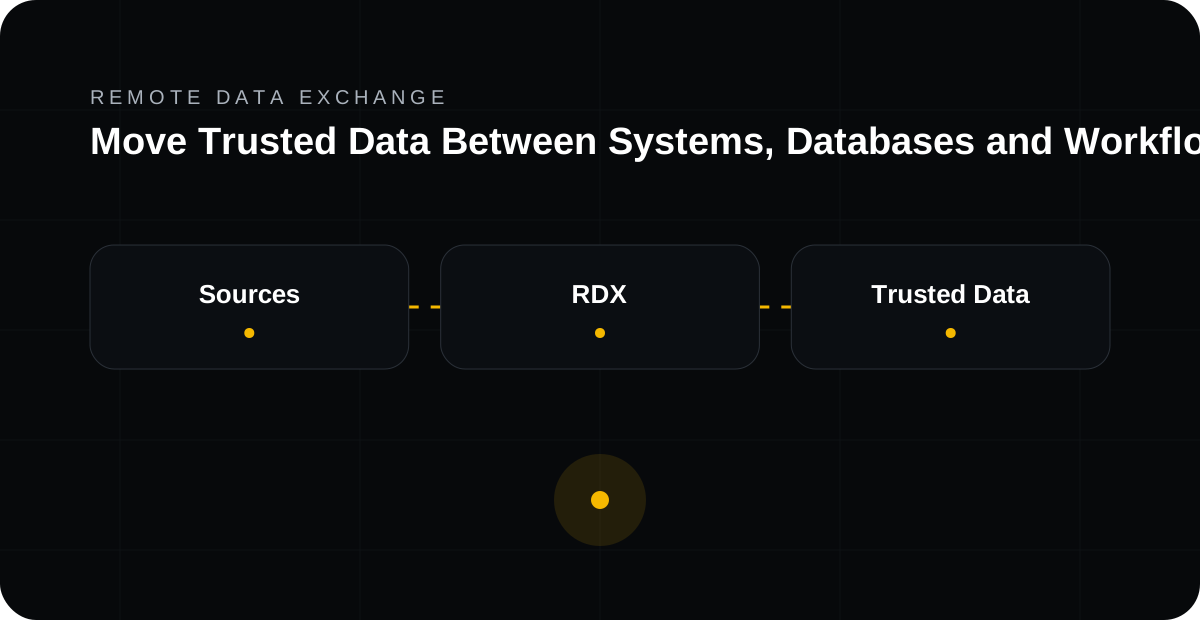
RDX data integration services validate, transform, synchronise and route business data across applications, databases, files and analytics workflows.
What problem it solves
When the workflow breaks between systems, people become the integration layer.
- Different systems hold conflicting customer or operational records.
- Teams export CSV files to move data between applications.
- Reporting requires manual preparation.
- AI initiatives lack a reliable data foundation.
What RDX connects
Build the exchange around the operational outcome.
01Operational databases
02CRM and ERP data
03Cloud data stores
04Files and feeds
05Reporting platforms
06External data sources
What can be automated
Move information, decisions and next steps with less manual coordination.
01Data validation
02Format transformation
03Master-record synchronisation
04Scheduled or event-driven exchange
05Exception routing
06Analytics data preparation
Where AI adds value
Use AI where information needs interpretation, not everywhere.
AI becomes more useful when authorised business data is accessible, structured and connected to the workflow context in which decisions or actions are required.
Business outcomes
Cleaner operational dataFewer manual file transfersFaster reportingMore reliable downstream automationBetter AI readiness
Relevant industries
Where this capability commonly creates value.
Questions
Data Integration Services FAQs
What is data integration?
Data integration combines or exchanges information across different systems so the data can be used consistently in business processes, reporting and automation.
Does RDX build a new data warehouse every time?
No. The architecture depends on the outcome. Some workflows need direct synchronisation, some need an exchange layer and others benefit from a central data platform.
Can data be validated before it moves?
Yes. Validation, transformation and exception handling are core parts of an intelligent data exchange.
Next step