
API Integration Services
Connect Products, Platforms and Partners Through Reliable APIs
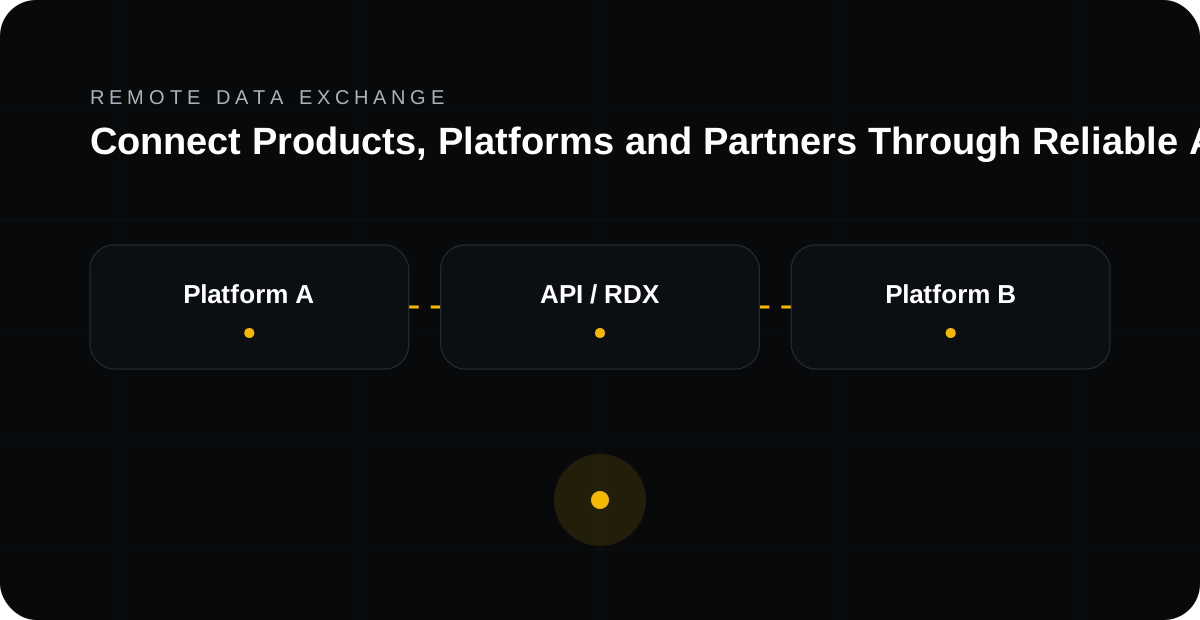
RDX API integration services connect business applications, SaaS platforms, partner systems and custom software using APIs, webhooks and event-driven exchanges.
What problem it solves
When the workflow breaks between systems, people become the integration layer.
- Customer integrations consume core engineering time.
- Third-party systems use different data structures.
- Manual imports are used where real-time exchange is needed.
- Integration failures are difficult to monitor.
What RDX connects
Build the exchange around the operational outcome.
01REST APIs
02GraphQL APIs
03Webhooks
04Partner APIs
05Payment and service APIs
06Custom backend systems
What can be automated
Move information, decisions and next steps with less manual coordination.
01Real-time synchronisation
02Event-driven actions
03Authentication and token flows
04Data mapping
05Retry and exception handling
06Integration monitoring
Where AI adds value
Use AI where information needs interpretation, not everywhere.
APIs give AI-enabled workflows a controlled way to retrieve permitted context and execute approved actions in business systems.
Business outcomes
Faster integration deliveryMore reliable data exchangeLess pressure on product teamsBetter partner and customer interoperabilityReusable integration architecture
Relevant industries
Where this capability commonly creates value.
Questions
API Integration Services FAQs
What types of APIs can RDX integrate?
RDX can work with common REST, GraphQL, webhook and custom API patterns depending on the systems and security requirements involved.
Can RDX build an API where one does not exist?
Where appropriate, RDX can design a controlled API or integration service around an existing database, application or backend capability.
How are failures handled?
Production integrations should include validation, retries, logging, exception routing and monitoring rather than silently dropping transactions.
Next step