Understand the Operational Gap
Identify where work slows down, data is duplicated, information is missing or teams depend on manual coordination.
RDX does not begin by asking which automation tool you want. We begin by finding where information stops moving, which business result is affected and which systems must work together to remove that friction.
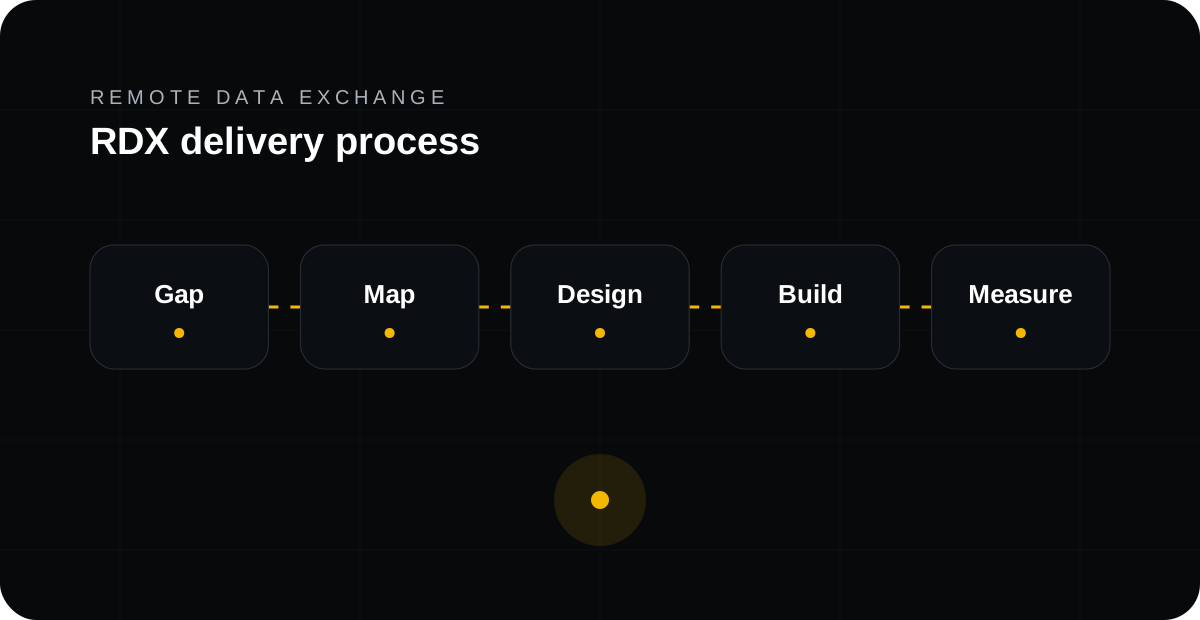
Identify where work slows down, data is duplicated, information is missing or teams depend on manual coordination.
Map the CRM, ERP, databases, files, applications, APIs, email and external systems involved in the workflow.
Agree the business result first: shorter cycle time, faster invoicing, lower manual workload, better response, fewer errors or better visibility.
Define what moves, from where, to where, with what validation, transformation, timing, business rules and exception handling.
Connect systems using the appropriate APIs, databases, files, events or controlled integration methods.
Automate repeatable handoffs and introduce AI where unstructured information needs to be interpreted or summarised.
Test normal flows, incomplete records, exceptions, failures, retries, permissions and recovery paths.
Release with monitoring, clear ownership, rollback planning and human checkpoints where the workflow requires them.
Compare the operational baseline with the new workflow and identify the next high-value gap to remove.
RDX defines a measurable business outcome before engineering begins. That keeps integration scope focused on the operational gap instead of turning the engagement into technology for technology’s sake.